


Blog for professionals

September Landscape Project: A Guide for Architects and Outdoor Space Designers
As September begins, the dynamics of working on outdoor projects undergo a significant metamorphosis. For landscape architects and interior designers, this month is not only a time for concluding summer projects but, above all, a key moment to prepare spaces for harsher weather conditions and lay the foundations for the upcoming season. Designing an outdoor area for a demanding private client at the turn of the season requires balancing coherent aesthetics with absolute technological durability. Here is a comprehensive overview of the issues, materials, and vegetation to consider when designing terraces and gardens in September. 1. Plant selection: Structure and mature tones for the turn of the month Wise design of vegetation relies on ensuring visual appeal once summer perennials finish blooming. September is the ideal time to plant species that give the space an architectural character and remain effective until the first frosts. Ornamental grasses as a frame for the space: Miscanthus sinensis (Chinese silver grass), Pennisetum alopecuroides (fountain grass), and Cortaderia selloana (pampas grass) reach the peak of their visual representation. Their fluffy inflorescences add lightness to projects while also serving as a natural acoustic and visual barrier. Perennials with late-autumn structure: Sedum spectabile (showy stonecrop), Echinacea purpurea (purple coneflower), and Symphyotrichum (asters) introduce noble, muted colors. After flowering, their dried stems create a sculptural pattern against the winter landscape. Evergreen and container species: In large-format planters made of raw ceramic or architectural concrete, Calamagrostis (reed grass), Skimmia japonica, and selected varieties of Heuchera (coral bells) with dark, burgundy-copper leaves work perfectly. 2. Material engineering: Specifications in the premium zone In high-end projects, resistance to local weather conditions is a criterion equal to aesthetics. When introducing elements of landscape architecture and lounge furniture into a concept, it is worth opting for materials that guarantee no need for seasonal dismantling or complex maintenance. Galvanized steel and powder coatings: This provides an ideal structural core for spaces exposed to autumn rain and humidity. The galvanizing process blocks oxygen access to the metal, preventing sub-coating corrosion. Combined with high-quality powder coating, it provides a satin, durable finish resistant to UV radiation. Tight-weave fabrics: Designed for year-round use, solution-dyed fibers do not fade in the sun and must exhibit high hydrophobicity. Rainwater beads on their surface, allowing investors to enjoy their relaxation zone without the need to constantly hide cushions during sudden weather changes. Natural steel and stone accents: Eucalyptus or teak wood should be paired with matte metal to give the whole a modern yet warm character that ages naturally over the years. 3. What to focus on when investing in year-round spaces? When designing modern residences in cities like Warsaw, Poznań, or Kraków, the concept of "seasonality" is increasingly being abandoned. The terrace becomes a visual extension of the living room 365 days a year. Fluidity of views from the interior: The layout of furniture and lighting points on the terrace should be planned from the perspective of the view from inside the building. In winter and autumn, investors spend more time in the living room, observing the garden through floor-to-ceiling HS glazing. Lighting scenography and microclimate: The low sun at the beginning of autumn requires the use of diffused light. It is worth including point ground lighting, heat radiators integrated into the roof architecture, and fire pit zones in projects. Water drainage ergonomics: Ensuring proper slopes and choosing flooring finishes with high permeability makes it easier to maintain the investment in impeccable condition, free of streaks and deposits. Conscious selection of high-standard materials and a well-thought-out plant composition ensure that the designed space remains aesthetically sound regardless of weather whims, becoming a calling card for any architectural studio.
Learn more
Light after the season. How does the autumnal shift in perspective redefine the outdoor area?
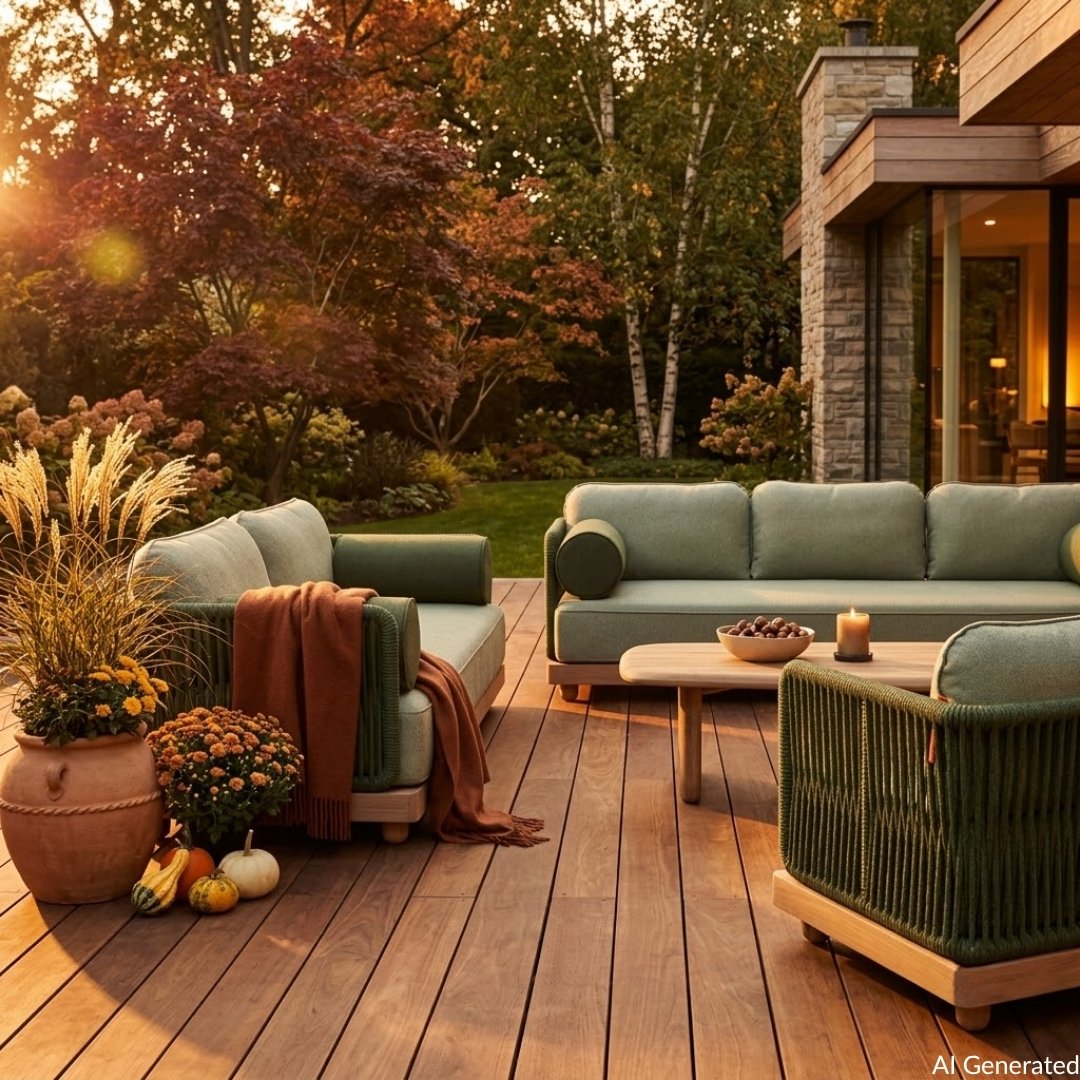
With falling temperatures and shorter days, the outdoor zone undergoes a subtle yet essential transformation. From an active space focused on direct relaxation in the fresh air, it becomes an object of passive contemplation. For the architect and interior designer, this time of year is a functional test: the terrace, visible through large-format living room glazing, becomes a permanent, year-round frame within the home's structure. Here are three key issues to focus on at the turn of the seasons when working with both individual and commercial clients. 1. Passive frame, or the architecture of the view behind glass In the autumn and winter period, outdoor furniture ceases to serve a purely functional purpose and begins to play the role of small architectural elements. The solid shape of a sofa, the proportions of a table, or the texture of finishes become a frame for the garden in its dormant state. When designing an outdoor zone with a year-round perspective in mind, it is worth opting for sculptural forms and muted colors that do not "fade" into the grays of the autumn landscape. A well-planned furniture composition maintains visual harmony between the interior and the surroundings, preventing the effect of a desolate, stark terrace. 2. The microclimate challenge: Protection or year-round exposure? The end of the season is when clients most frequently ask about winter storage logistics. A modern approach to design eliminates the need for total dismantling and storing equipment in garages or basements. High-quality aluminum frames and specialized, custom-made covers allow for the main structures to be safely left outside. The key is protection against atmospheric pollutants and snow accumulation while maintaining air circulation. As a result, the furniture remains in its place in the spatial plan, and returning to use in the spring requires only the removal of the covers. 3. Investment calendar: Spring 2027 begins in early autumn From the perspective of an architectural studio’s workflow, the end of summer is actually the beginning of the design cycle for investments planned for the following year. Material specification processes, stock reservations, and the customization of sets to the client's individual dimensions require time. Finalizing the outdoor zone concept during the autumn-winter stage guarantees smooth implementation without the risk of execution delays at the beginning of the next season. Project cycle stage Autumn / Winter Early Spring Studio action Concept, 3D specification, selection of samples Order finalization, booking installation slots Benefit for the investor Guaranteed supply continuity, stress-free schedule Terrace ready by the first warm days Reliable planning of outdoor zones requires proven technical support. For architectural and design studios, we provide full support during the seasonal transformation period!
Learn more