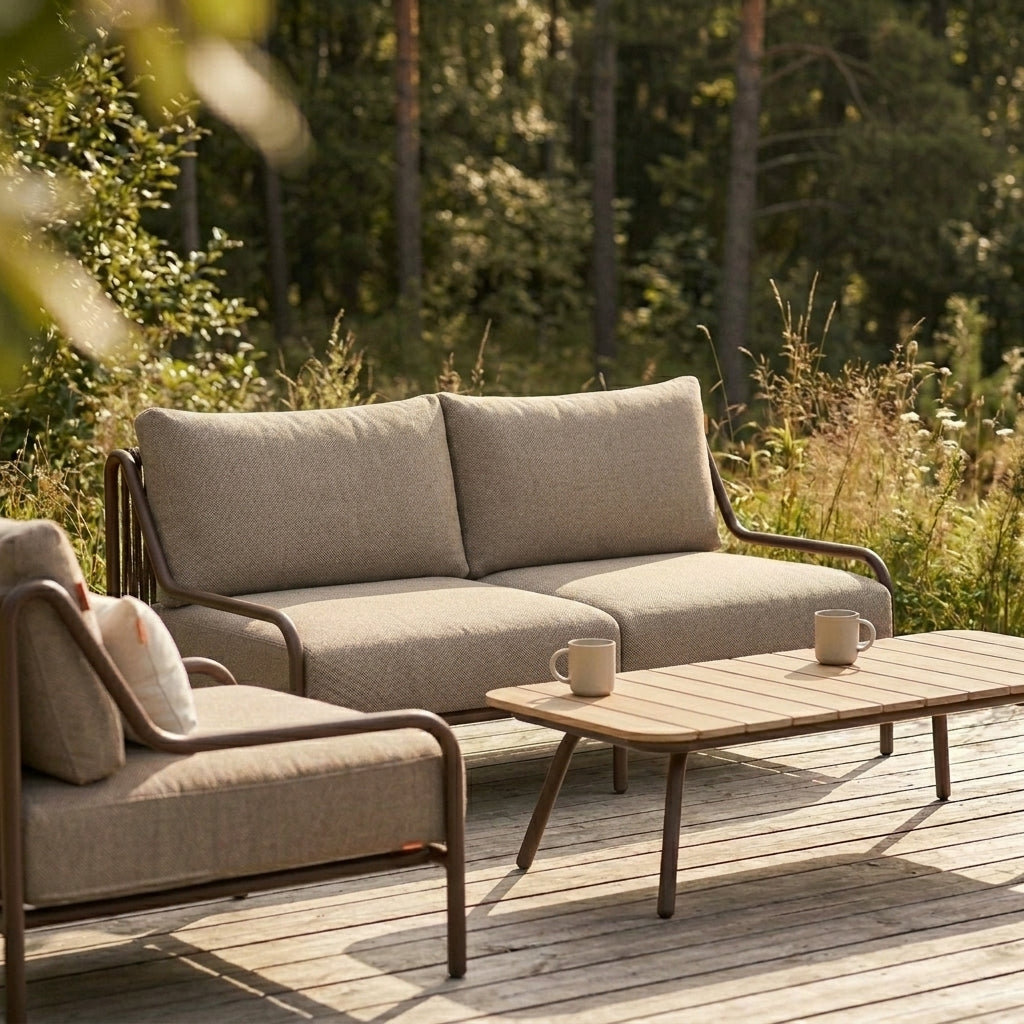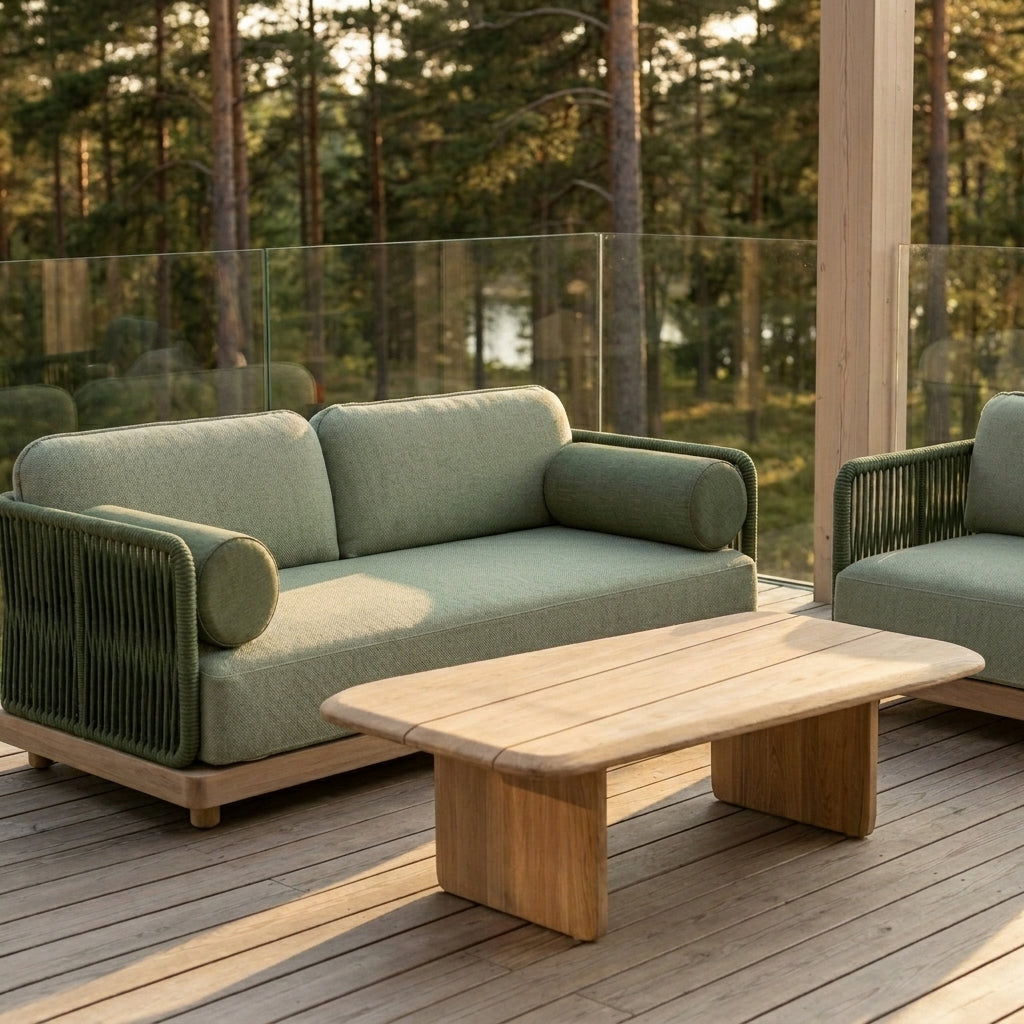




In the commercial sector, from luxury boutique hotels and city-center office rooftops to prestigious real estate developments, outdoor space has become a key competitive advantage. Investors know that a well-designed viewing terrace or a lounge area by a hotel spa translates directly into the prestige of the property and its profitability.
For an architect working on commercial projects, the priorities are clear: the furniture must impress with its form, but its technical specifications must stand the test of time and intensive use. How do you combine rigorous contract standards with uncompromising design?
1. Material durability to HoReCa standards
In private projects, garden furniture is treated with care. In public and commercial spaces, high guest turnover and the lack of individual care require materials designed for special tasks.
Our collections are created with maximum operational resistance in mind. We use advanced acrylic fabrics and technical foams that do not absorb moisture (quick-dry structure) and are resistant to stains from wine, suntan oils, or coffee. For an architect, this means one thing: design security. The investor receives a product that still looks as it did on opening day after three seasons of intensive use in a restaurant garden.
2. Space flexibility: furniture that keeps up with events
A hotel patio or viewing terrace rarely serves only one function. During the day, it is a relaxation zone for guests; in the evening, a spot for an elegant cocktail; and on weekends, an event space. Permanent, heavy furniture structures limit a facility's business potential.
The modularity of outdoor furniture allows for rapid layout reconfiguration. Lightweight aluminum profiles enable hotel staff to change the arrangement in just a few minutes—from scattered coffee corners to a large, integrated corner sofa for a private event.
3. Aesthetics that attract
Contemporary commercial architecture must be photogenic. Hotel and restaurant guests buy with their eyes, and the unique design of an outdoor area becomes free advertising for the property on social media.
We are moving away from repetitive, boring catalog furniture. The rounded shapes, refined proportions, and unique color palettes of Kunesti furniture give commercial spaces a unique, luxurious character that sets the investment apart from the competition.